Garage door sensor problems do not always begin with a door that completely refuses to close. In many cases, the first symptoms are much less dramatic. The door may reverse once and then work normally, an indicator light may flicker occasionally, or closing problems may appear only at a particular time of day.
These early inconsistencies are easy to dismiss because the garage door still works most of the time. However, they can be useful clues that the safety sensor system is becoming unreliable. Recognizing changes in sensor alignment early can help homeowners distinguish a developing sensor issue from problems involving the remote, opener, or other door components.
Why Sensor Problems Can Seem Random at First
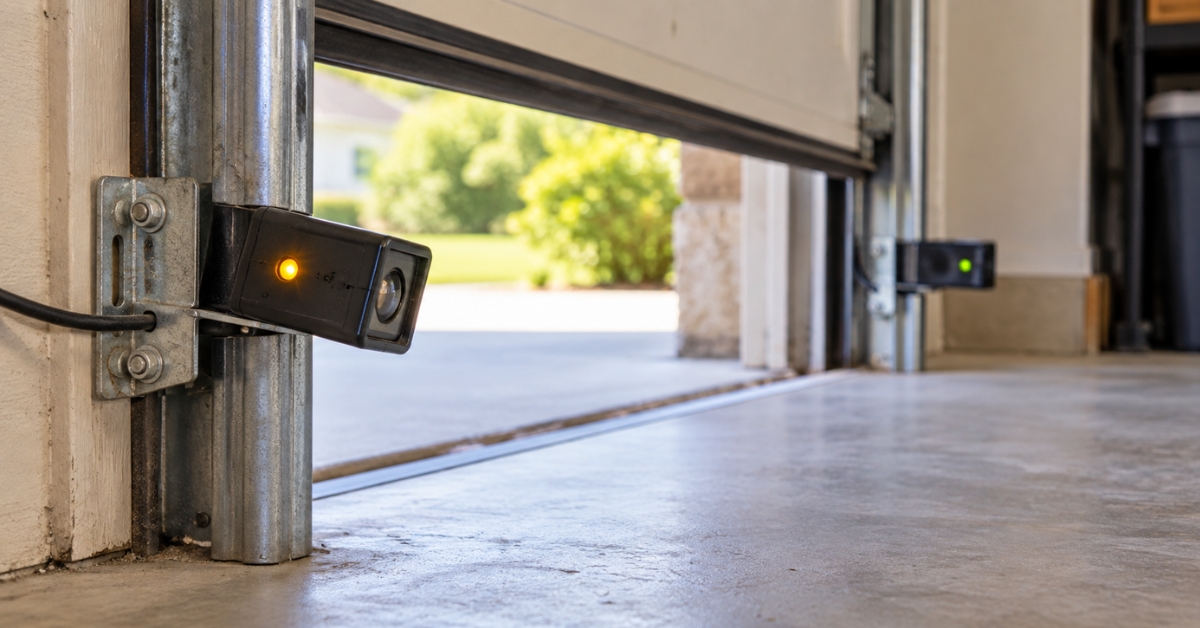
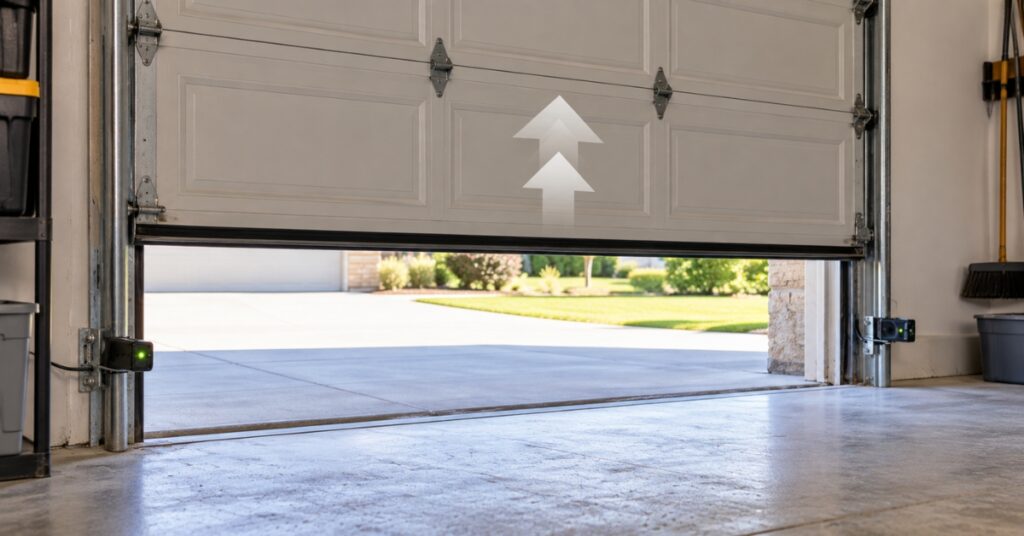
Garage door safety sensors are generally installed near the bottom of the door opening, with one unit on each side. They communicate across the opening using an invisible beam. When an obstruction interrupts that beam, the opener is designed to stop or reverse the closing door.
For the system to work consistently, the sensors need a clear line of sight and proper positioning. A sensor does not necessarily have to be dramatically crooked to cause trouble. A slightly shifted bracket, dirty lens, or intermittent obstruction may be enough to interfere with the beam.
That is why early sensor alignment problems can initially look like unpredictable opener behavior rather than a clear sensor failure.
The important distinction is consistency. A mechanical problem may produce symptoms throughout the door’s movement, while a developing sensor issue often creates inconsistent closing behavior. The door opens normally but becomes unreliable specifically when it is asked to close.
Blinking Sensor Lights Are an Early Clue
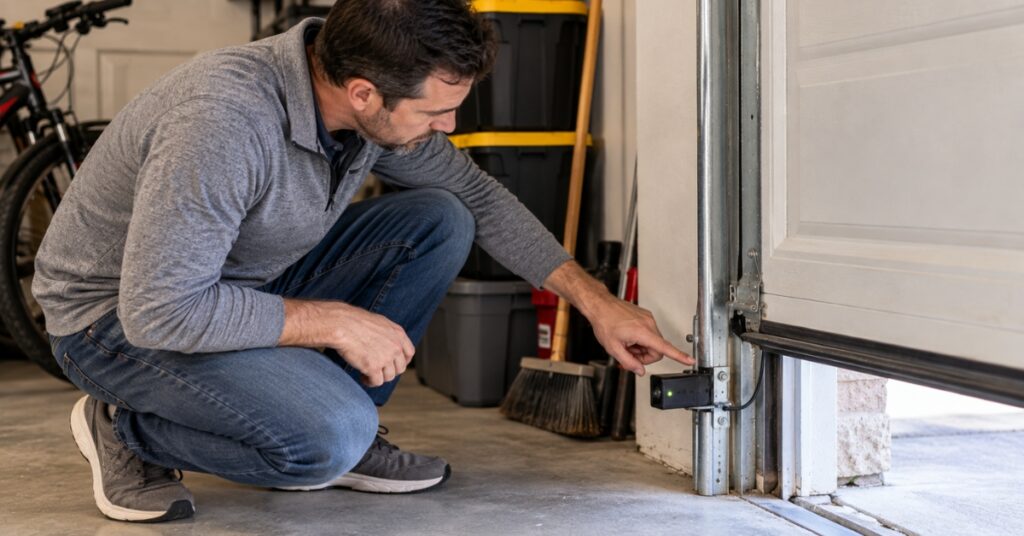
One of the easiest places to look for an early warning is the indicator light on each sensor.
The exact meaning of an indicator light depends on the opener manufacturer and model, so homeowners should consult the appropriate owner’s manual before interpreting a specific pattern. In general, however, a light that flickers, dims, goes out, or changes behavior can indicate that the sensors are having trouble maintaining their connection.
A steady light that occasionally begins flickering deserves attention, particularly when it happens around the same time the door starts behaving differently.
Clopay notes that an off, dim, or flickering receiving-sensor LED can indicate an alignment problem. Its guidance also identifies accidental bumps, shifting mounting brackets, dirt, spider webs, and moisture as possible causes of sensor trouble. Homeowners can review Clopay’s sensor alignment guidance for additional background.
Inconsistent Closing Can Appear Before Complete Failure
A garage door that refuses to close every single time presents an obvious problem. A door that fails once every few days is easier to ignore.
That inconsistency is precisely what can make early sensor issues difficult to identify.
You might press the remote and see the door begin moving downward, only for it to stop and return upward. A second attempt works perfectly. Later that evening, the same problem happens again.
The Door Starts Down and Suddenly Reverses
Random reversing is one of the behaviors worth watching.
Safety sensors are intended to tell the opener when the closing path has been interrupted. If their beam becomes unreliable because the sensors are slightly out of position, the opener can respond as though something entered the doorway.
The result may be a door that:
- Begins closing normally but reverses unexpectedly
- Works correctly on the second or third attempt
- Develops problems after something near the track has been moved
- Opens reliably but has inconsistent closing behavior
These symptoms do not automatically prove that the sensors are responsible. Door travel settings, wiring, track problems, and other opener issues can sometimes create similar behavior. The pattern provides a reason to inspect the sensor area rather than immediately assuming the entire opener has failed.
Sunlight Can Make a Marginal Problem More Noticeable
A particularly confusing symptom is a garage door that behaves differently depending on the time of day.
For example, the door may close normally in the morning and evening but become unreliable when strong afternoon sunlight reaches one of the photo eyes. Direct sunlight can interfere with some sensor systems, particularly when the receiving sensor is exposed to intense light.
This can reveal a system that is already operating near the edge of reliable alignment.
If the door repeatedly develops closing problems during the same bright part of the day, pay attention to whether sunlight is striking one of the sensors. The timing itself is an important troubleshooting clue.
It also explains why homeowners sometimes test a troublesome door later and find that everything suddenly works. The environmental condition that contributed to the problem may simply have changed.
A Bumped Bracket May Not Look Obviously Bent
Garage door sensors are installed low enough that they are vulnerable to everyday activity.
A trash can can bump one. A broom, bicycle, storage container, lawn tool, or child’s toy can shift a mounting bracket. Cleaning around the tracks can also move a sensor slightly without anyone realizing it.
The bracket does not have to be hanging loose for this to matter.
A small change in angle can weaken the connection between the sensors while still allowing the door to work under some conditions. Vibration from repeated door operation may also allow a loose bracket to shift gradually.
If closing trouble begins shortly after reorganizing or cleaning the garage, inspecting the sensor position is a sensible first step.
Dirty Lenses Can Mimic Misalignment
Not every apparent alignment problem comes from a sensor physically moving.
Because photo eyes sit close to the garage floor, they are exposed to dust, cobwebs, moisture, grass clippings, and other debris. A film across a lens can interfere with the sensor’s ability to maintain a reliable beam.
Clopay recommends keeping safety sensors free from dust, cobwebs, and debris and cleaning them with a soft cloth while taking care not to move them out of alignment.
A homeowner-safe visual check can therefore include looking for obvious obstructions and gently cleaning the exterior of the lenses. If the problem continues, garage door sensor repair may be appropriate, especially when there is visible bracket damage, wiring trouble, or persistent inconsistent operation.
Safety Features Can Explain Behavior That Looks Like an Opener Failure
When a garage door suddenly reverses, it is natural to suspect the opener motor. In some situations, however, the opener is responding exactly as its safety system tells it to.
Photo-eye sensors are part of the opener safety features designed to prevent a closing door from continuing downward when something is detected in its path.
Understanding that relationship changes how you interpret the symptom. A reversing door does not necessarily mean the opener lacks enough power to close it. The opener may be receiving a safety signal telling it not to continue.
That is also why sensors should never be permanently bypassed or disabled simply to make a troublesome door close. The safety function needs to work correctly, not merely be removed from the equation.
Why Resetting the Opener May Not Solve the Problem
Intermittent closing trouble sometimes leads homeowners directly to the opener’s Learn or Reset controls.
That can create a second problem without solving the first.
Sensor alignment and remote programming are separate parts of the system. If the remote successfully tells the opener to begin closing, but the door subsequently reverses because of a sensor signal, erasing and reprogramming remote codes does not address the original cause.
Before changing stored codes or resetting opener settings, it helps to understand opener programming basics and determine whether programming is actually related to the symptom.
A useful question is: Does the opener receive the command?
If pressing the remote reliably starts the door moving, communication between the remote and opener is probably occurring. What happens after movement begins may point toward a different system.
The Opener Light Can Provide Useful Information Too
The main opener light is another reason garage opener troubleshooting can become confusing.
Some openers use flashing lights to communicate faults or safety-sensor interruptions. Clopay, for example, notes that the opener light may blink rapidly when misaligned or blocked photo eyes cause a closing door to stop and reverse.
That is different from a light fixture that fails to illuminate, flickers because of a bulb or electrical issue, or stays on unexpectedly.
Before assuming a strange light pattern requires opener light repair, pay attention to when it occurs. A flashing pattern immediately after a failed closing attempt may be diagnostic feedback rather than a problem with the light itself.
Your opener’s manual is the best reference for model-specific indicator and diagnostic codes.
Patterns Matter More Than a Single Failed Closing Attempt
One random reversal is not enough to diagnose sensor misalignment. Something may genuinely have crossed the beam, or a temporary obstruction may have been present.
Repeated patterns are more informative.
Consider whether the problem:
- Happens mainly during closing
- Appears at a particular time of day
- Started after cleaning or moving items in the garage
- Occurs along with a flickering sensor indicator
- Improves temporarily after the sensor lenses are cleaned
- Appears after a sensor bracket has been bumped
- Happens even though the remote successfully activates the opener
These details can make garage opener troubleshooting much more focused.
Homeowners should also avoid repeatedly changing unrelated settings in an attempt to make the symptom disappear. Adjusting travel limits, force settings, remote programming, and other controls simultaneously can make it harder to determine what was actually wrong.
When the Problem Needs More Than a Quick Check
Simple observations can reveal quite a bit. You can look for objects blocking the beam, examine whether the sensors appear to face each other, check for dirt on the lenses, and notice whether a mounting bracket looks loose or damaged.
Persistent trouble deserves more attention.
A professional inspection becomes especially useful when the sensors appear properly positioned but the door continues reversing, indicator lights remain abnormal, wiring looks damaged, brackets are bent, or the problem returns shortly after adjustment.
The objective should not be to force the door to close despite the sensor system. It should be to determine why the safety system is reporting a problem and restore reliable operation.
Catching the Warning Signs Before Closing Becomes Impossible
Sensor problems often become obvious only when the garage door finally refuses to close. By that point, however, there may have been days or weeks of smaller clues.
An occasional reversal, flickering indicator, time-of-day pattern, dirty lens, or recently bumped bracket can all provide useful information. None should be treated as proof on its own, but several symptoms appearing together can make a developing sensor issue much easier to recognize.
Paying attention while the door still works intermittently can also make troubleshooting more precise. Instead of waiting for a complete failure, homeowners can identify when the behavior occurs, what changed around the sensors, and whether the problem follows a repeatable pattern.
Frequently Asked Questions
What does a misaligned garage door sensor look like?
A sensor may look slightly angled compared with the sensor on the opposite side. In other cases, the physical difference is difficult to see, and the more noticeable clue is an indicator light that flickers, dims, or goes out. Always check the opener manufacturer’s instructions because indicator behavior varies by model.
Can garage door sensors be slightly misaligned and still work?
Yes. A small positioning problem may initially cause intermittent behavior rather than complete failure. The door might close normally several times before suddenly reversing or refusing to close.
Why does my garage door reverse only sometimes?
Intermittent reversing can have several causes, including a temporarily interrupted sensor beam, dirty lenses, loose sensor brackets, wiring issues, or other opener and door problems. Look for a repeatable pattern rather than assuming every reversal has the same cause.
Can sunlight interfere with garage door sensors?
Direct sunlight can sometimes interfere with photo-eye operation. If closing trouble repeatedly occurs during a particular bright part of the day, note whether direct sunlight reaches the receiving sensor.
Should I reset my garage door opener if the sensors are blinking?
Not automatically. A reset generally will not correct a sensor that is dirty, obstructed, loose, or out of alignment. Check the sensor area and consult the opener’s manual before changing programming or stored settings.
Is it safe to bypass the garage door sensors?
Safety sensors should not be permanently bypassed to make a malfunctioning door close. They are designed to detect obstructions in the closing path. If the sensors cannot operate reliably after basic cleaning and visual checks, the system should be properly inspected and repaired.