
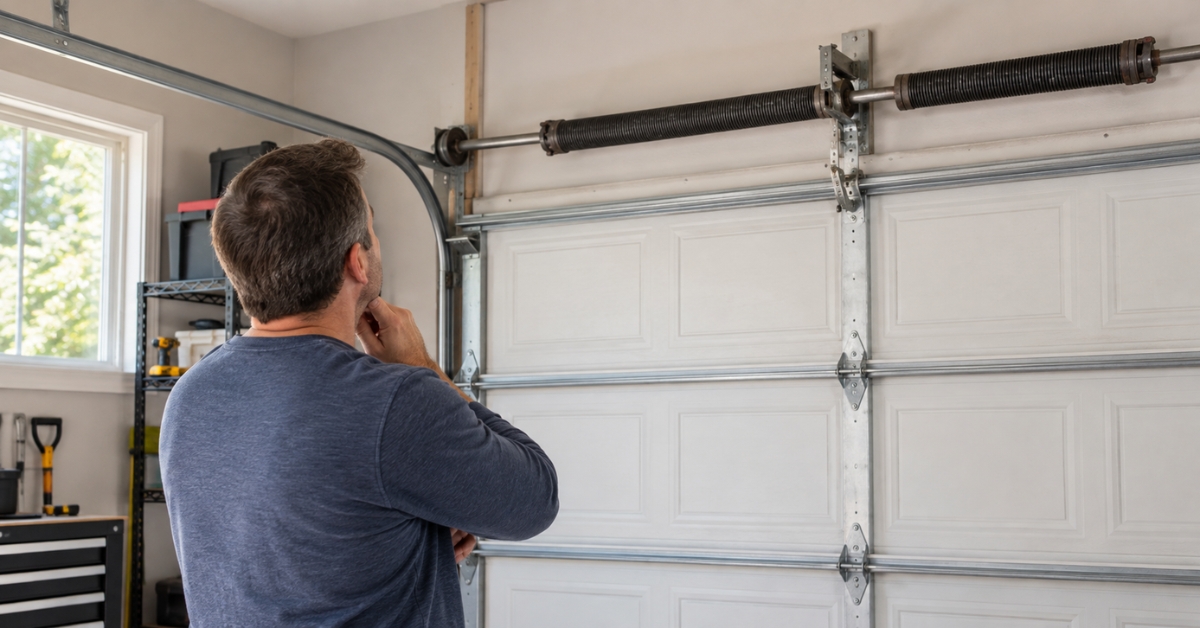
Garage door springs do some of the hardest work in the entire garage door system. Every time the door opens or closes, the springs help counterbalance its weight so the door can move smoothly without forcing the opener to handle the full load. Because this happens quietly in the background, spring wear can be easy to overlook until something changes.
A spring does not always fail without warning. Rust, changes in movement, unusual sounds, visible stretching, and increased strain on the opener can all indicate that something is changing. Homeowners can watch for these signs without touching, tightening, or adjusting the springs themselves. Knowing what to look for can help identify a developing problem before a spring finally snaps.
Start With a Visual Check From a Safe Distance
The safest spring check begins with observation. You do not need to grab the spring, remove hardware, loosen fasteners, or test its tension. In fact, you should not. Garage door springs store substantial mechanical energy, and attempting to adjust one without the proper tools and training can result in serious injury.
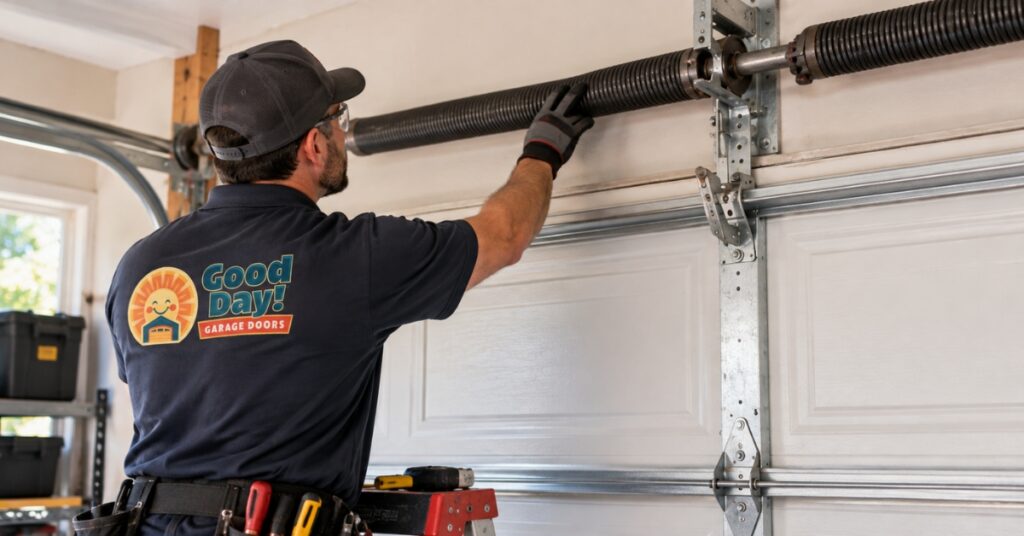
If a spring appears damaged or the door’s behavior has noticeably changed, professional garage door spring replacement may be necessary. A technician can determine whether the spring itself is failing or whether another component is contributing to the problem.
Before looking closely at the system, close the garage door and stand where you can clearly see the spring assembly without reaching over tracks, brackets, cables, or other moving components. Use good lighting and look for changes compared with how the system normally appears.
For a quick visual reference before going through the warning signs below, this spring inspection guide shows what homeowners can look for without attempting spring adjustments themselves.
Look for a Visible Gap in the Spring
One of the clearest signs of a broken torsion spring is a noticeable gap in the coil. Torsion springs are typically mounted horizontally above the garage door. When an intact spring is wound, the coils sit tightly together. If the spring breaks, part of the coil can separate and leave an obvious space.
A gap does not mean the spring is “a little loose.” It can mean the spring has already failed.
If you notice a separation in the spring, avoid repeatedly operating the door to see whether it still works. The opener may still be capable of moving the door in some situations, but it can be forced to lift far more weight than it was designed to handle.
Rust Can Be an Early Warning Sign
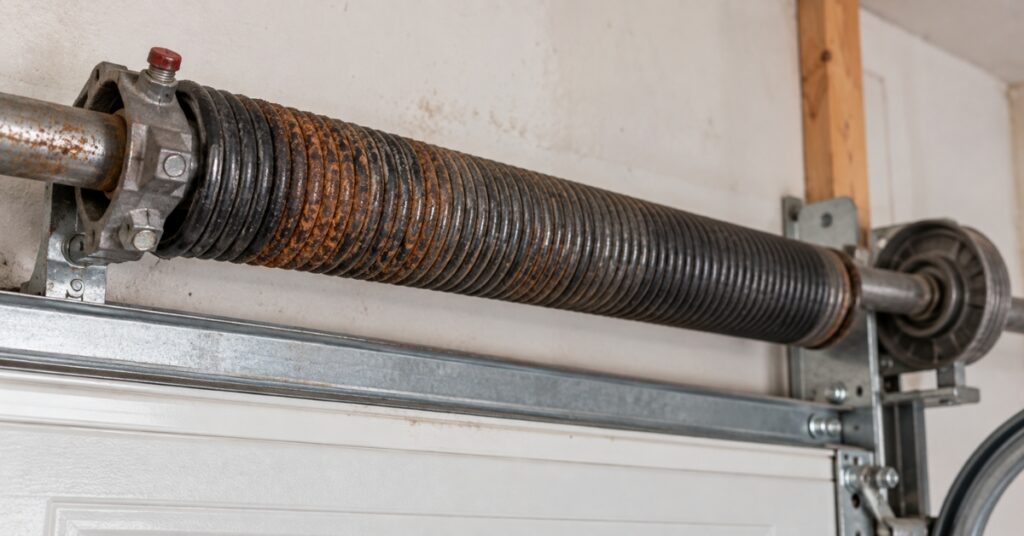
A little surface discoloration may not mean a spring is about to snap today, but significant corrosion deserves attention.
Garage door springs are made of metal and are exposed to changing temperatures, moisture, humidity, and other environmental conditions. Over time, corrosion can affect the spring’s surface and contribute to deterioration.
Look for areas where the spring appears heavily rusted, flaky, pitted, or substantially different from the rest of the coil. Rust combined with other symptoms, such as unusual noises or changes in door movement, is more concerning than light surface discoloration alone.
Avoid scraping rust from the spring or applying a random household product while inspecting it. The goal is to observe its condition, not manipulate the spring.
Watch for Stretching or Changes in the Coils
Springs should have a relatively consistent appearance. Changes in coil spacing or a spring that looks unusually elongated can indicate wear or damage.
Extension spring systems, which are commonly positioned along the sides of the garage door, may show different symptoms from torsion spring systems. A stretched extension spring may not return to its expected shape or may appear noticeably different from the spring on the opposite side.
Do not pull on a spring to compare its tension or try to straighten anything that looks unusual. A visual comparison from a safe distance is enough.
If you are trying to understand the other components used throughout a garage door system, reviewing common garage door repair parts can also help you distinguish springs from rollers, hinges, cables, and other hardware. Identifying a component is useful, but replacing a high-tension spring is a different matter entirely.
Pay Attention to New or Unusual Sounds
Garage doors are not silent machines, but you probably know the sounds your own door normally makes. A new noise can therefore be one of the earliest clues that something has changed.
Popping, creaking, squeaking, grinding, or sudden loud noises during operation can indicate increased friction, worn hardware, spring deterioration, or another mechanical problem. A sharp bang from the garage can sometimes be the sound of a spring breaking.
The important detail is whether the sound is new or becoming more frequent.
A single squeak does not automatically mean garage door spring replacement is required. However, persistent noise combined with visible corrosion, uneven movement, or increased opener strain gives you more reason to have the system evaluated.
Uneven Door Movement Deserves Attention
A properly balanced garage door should travel relatively evenly along its tracks. If one side begins moving differently from the other, something in the lifting system may not be functioning correctly.
You might notice the door tilting slightly as it rises, jerking during movement, hesitating at certain points, or appearing uneven when opening or closing.
These symptoms can have several causes. Springs are one possibility, but cables, rollers, tracks, or other components can also affect movement.
That is why observation matters. Rather than assuming a particular component is responsible, note exactly what the door is doing and when the problem occurs. Those details can help a technician diagnose the issue more efficiently.
A Door That Suddenly Feels Heavier Is Telling You Something
The springs counterbalance much of the garage door’s weight. When they lose their ability to do that effectively, the difference can show up in how the entire system behaves.
A door that previously moved smoothly may suddenly seem sluggish. It may hesitate before rising or struggle during the first part of its travel. In some cases, the opener may fail to lift the door at all.
Homeowners sometimes assume this automatically means the opener is failing. That is not always the case.
If the springs are no longer carrying their share of the load, the opener has to work harder. Continuing to operate the door repeatedly under those conditions can place unnecessary stress on other components.
Avoid trying to prove that the door is heavier by manually lifting a malfunctioning door. If the system is behaving differently, that change itself is enough reason to investigate.
Increased Opener Strain Can Point Back to the Springs
Your garage door opener and springs work together, but they perform different jobs. The opener controls movement, while properly functioning springs counterbalance the weight of the door.
When spring performance deteriorates, the opener may begin showing signs of strain.
The motor might sound louder than usual. The door could rise more slowly. The opener may stop partway through a cycle or appear to struggle at the beginning of the lift.
These symptoms do not prove that a spring is failing, but they should not be ignored. Continuing to run an opener against a poorly balanced door can turn one repair issue into several.
Inspection and Repair Are Two Very Different Things
There is an important boundary between checking a spring and working on one.
A homeowner can visually inspect the spring, listen for changes, observe door movement, and note signs of corrosion or damage. Those actions do not require physically interacting with the spring assembly.
Repair is different.
Torsion springs are wound under significant tension. Extension springs can also release substantial energy if a spring, cable, or attachment point fails. Loosening the wrong component or attempting to adjust spring tension can cause hardware to move suddenly and violently.
Do not loosen winding cones, brackets, cables, drums, or spring hardware as part of a home inspection. Do not attempt to rewind a torsion spring or reconnect a broken spring.
The purpose of checking the springs is to recognize when professional attention may be needed, not to diagnose and repair every possible problem yourself.
Why Spring Problems Can Become More Expensive When Ignored
Spring wear does not exist in isolation. A garage door operates as a connected system, so one struggling component can place additional stress on others.
A weakening spring can make the opener work harder. Uneven lifting can affect rollers and tracks. A sudden spring failure may leave the door unusable at an inconvenient time.
Addressing warning signs earlier can make it easier to understand the condition of the entire system before a complete failure occurs.
The price of spring service can also vary depending on the door, spring system, labor involved, and other factors. If budgeting is part of your decision, understanding spring replacement cost can provide useful context about the factors that may affect the final price.
When Should You Stop Using the Garage Door?
Some symptoms warrant more caution than others.
If you see a clearly broken spring, a large gap in a torsion spring, a hanging or damaged cable, severe door imbalance, or another visibly compromised component, stop repeatedly operating the door.
The same applies if the door moves unpredictably or appears at risk of coming off its normal path.
A garage door is heavy, and a malfunction in the counterbalance system can change how that weight is supported. Trying the opener “one more time” may place additional strain on the opener or other hardware.
When something looks seriously wrong, leave the system alone until it can be properly evaluated.
Make Spring Checks Part of Your Garage Door Routine
You do not need to wait until the garage door behaves dramatically differently to pay attention to the springs.
Occasionally look at the spring assembly when the door is closed. Notice whether corrosion is developing, whether the coils appear consistent, and whether anything looks different from previous checks. Listen to the door during normal operation and pay attention to gradual changes in sound or movement.
The goal is familiarity. When you know how your garage door normally looks and sounds, unusual changes become easier to spot.
Springs eventually wear because they go through repeated cycles every time the garage door opens and closes. Catching visible or operational changes early gives you an opportunity to respond before a complete failure leaves the door stuck.
Frequently Asked Questions
What does a garage door spring look like when it is about to break?
There is not always one definitive visual warning before failure. Possible signs include significant rust, inconsistent or stretched coils, unusual noises, changes in door balance, and increased difficulty opening the door. A visible gap generally indicates that a torsion spring has already broken.
Can I touch the spring to see whether it is loose?
No. Visual observation is safer than physically testing spring tension. Garage door springs can store significant energy, and spring hardware should not be loosened or adjusted without appropriate training and equipment.
Why is my garage door suddenly opening more slowly?
A slow-moving door can have several causes, including spring problems, opener issues, track resistance, worn rollers, or other mechanical conditions. If the change is sudden or accompanied by unusual noises or uneven movement, the system should be checked.
Does rust mean I immediately need garage door spring replacement?
Not necessarily. Minor surface rust does not automatically mean immediate failure. Heavy corrosion, pitting, or rust accompanied by operational changes is more concerning and may justify a professional evaluation.
Can a garage door opener lift the door with a broken spring?
Sometimes an opener may still move a door after a spring problem develops, but that does not mean it should. The opener can be forced to carry significantly more load when the counterbalance system is not functioning properly.
How often should I look at my garage door springs?
There is no need to perform a complicated inspection schedule. Periodic visual checks, along with paying attention to changes in sound and movement during normal use, can help you recognize developing issues. A professional garage door service can provide a more thorough evaluation when something appears abnormal.
Catch the Warning Signs Before the Snap
Garage door springs can wear gradually even when the door continues to operate. Rust, stretched coils, new noises, uneven movement, increased opener strain, and changes in how the door lifts can provide useful warning signs.
The safest approach is to observe rather than adjust. Look, listen, and pay attention to changes, but leave tension adjustments and spring repairs to trained professionals. Spotting a developing problem early can help you arrange garage door spring replacement before a sudden failure turns an ordinary morning into a garage door that will not open.


