
Garage door weather stripping is easy to overlook because it sits along the edges of the door and quietly does its job. When the seals are working properly, they help close the small gaps between the garage door and the floor, sides, and top of the opening. You may barely notice them until something starts getting through.
A worn seal tends to leave clues. You might see a strip of daylight under the door, find leaves and dirt collecting near one corner, notice water after a storm, or suddenly start seeing more bugs inside the garage. Paying attention to those changes can help you recognize when the seals are no longer creating the barrier they once did.
Start With What You Can See Around the Closed Door
You do not need special equipment to get a basic idea of how well the seals are performing. Close the garage door during daylight and look carefully around the perimeter from inside the garage.
The bottom edge deserves particular attention, but do not ignore the sides and top. Weather seals are supposed to make consistent contact with the surfaces around the door. Large gaps, damaged sections, or areas where the material has pulled away can allow outdoor conditions into the garage.
If the seal is clearly deteriorated or no longer making proper contact, professional garage door weather stripping replacement can restore the barrier around the door rather than leaving those openings exposed.
Daylight Around the Door Is an Easy Warning Sign
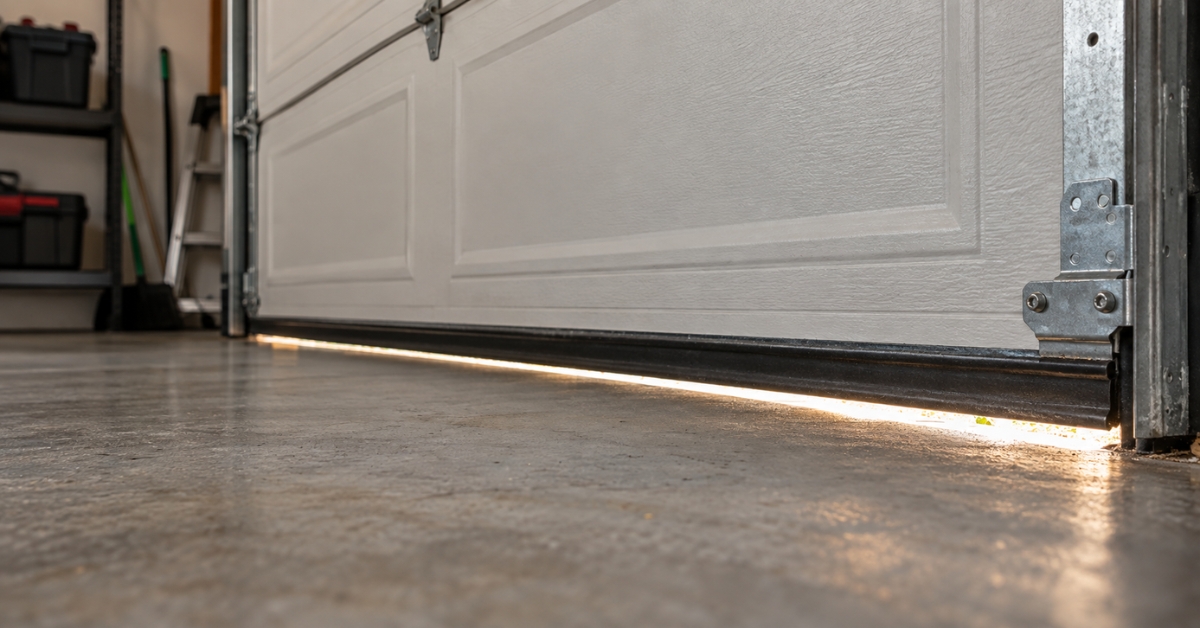
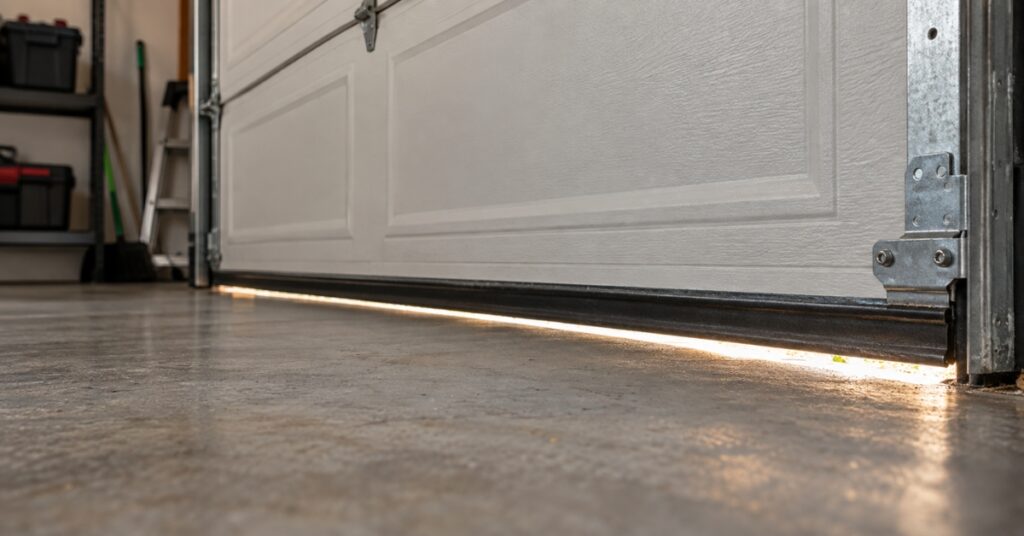
One of the simplest checks is looking for daylight.
With the garage door completely closed, stand inside and look along the bottom corners, sides, and top. A noticeable line of light can indicate that the seal is not sitting tightly against the surrounding surface.
Small irregularities can sometimes occur because garage floors and door openings are not perfectly uniform. A continuous gap or a gap that has become noticeably larger, however, deserves attention.
The location of the light can also provide useful information. Light underneath the door may point toward a deteriorated bottom seal or an uneven contact point. Light along the sides may mean the perimeter seal has hardened, shifted, cracked, or pulled away.
Look at the Condition of the Seal Itself
Weather stripping is exposed to temperature changes, moisture, dirt, movement, and repeated compression every time the garage door closes. Over time, flexible material can become brittle or lose its original shape.
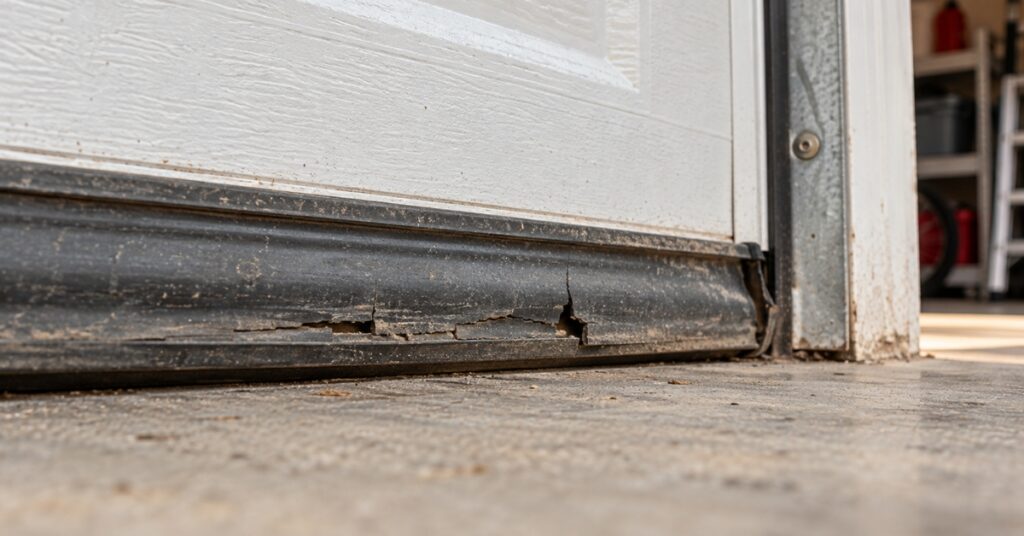
Walk around the door and inspect the seals closely. Look for cracking, splitting, tearing, flattening, missing sections, or rubber that feels unusually stiff.
A seal does not necessarily have to fall off completely before it stops working. Sometimes it remains attached but has become too rigid or compressed to conform to the surface properly.
If the problem extends beyond the seal itself, replacement components and other garage door repair parts may be worth evaluating. This is particularly relevant when brackets, tracks, retainers, or other door components are contributing to the gap.
Check Whether the Bottom Seal Still Sits Flush
The bottom seal has an especially difficult job because it must meet the garage floor every time the door closes.
When the door is down, look across the entire bottom edge. The seal should generally maintain contact with the floor rather than hovering above it in certain areas.
Pay particular attention to the corners. These are common places for gaps to become noticeable. A seal may shrink, pull away, or become compressed enough that one corner no longer closes tightly.
If you can easily see outside underneath a closed door, something is no longer sealing correctly. The weather stripping may be worn, but the door position or floor surface can also affect how the seal meets the ground.
Water Inside the Garage Can Point to a Failed Seal
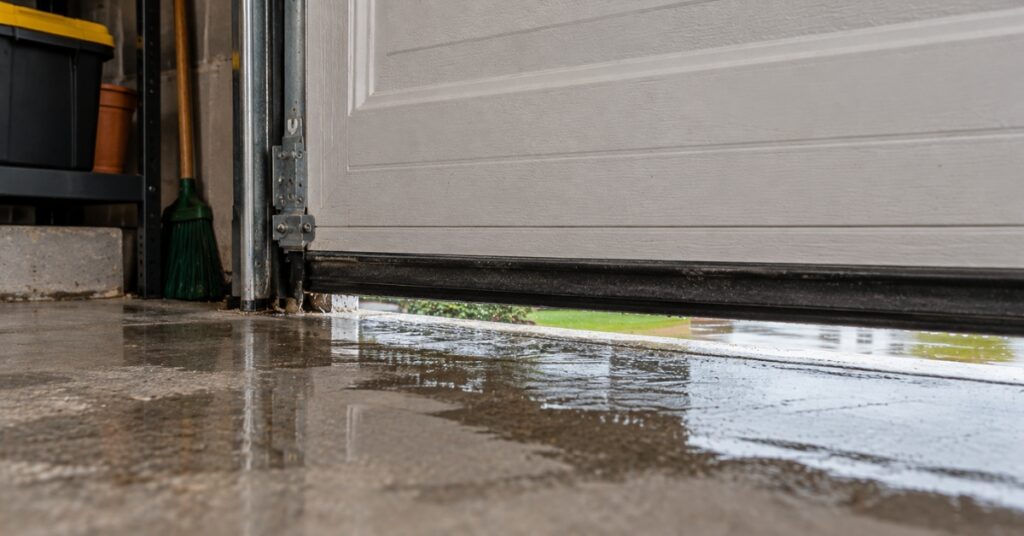
After rain or melting snow, check the area immediately inside the garage door.
A small puddle or damp line near the threshold can be an important clue. When the bottom seal is no longer making consistent contact, wind-driven rain can work its way underneath the door. Water may enter at one corner or appear across a wider section of the opening.
Look at where the moisture starts rather than only where it eventually collects. Water can travel along the floor, which sometimes makes the source seem farther away than it actually is.
Weather stripping cannot correct every drainage issue. If water is flowing toward the garage because of grading, gutters, or a significant slope in the driveway, the seal may not be the root cause. But when moisture consistently appears directly beneath a visible gap, the condition of the bottom seal is worth investigating.
For situations where the source of the gap is unclear, a broader garage door service inspection can help determine whether the issue is limited to weather stripping or involves the way the door itself is closing.
Drafts Can Reveal Gaps You Cannot Easily See
Not every failed seal creates an obvious beam of daylight.
Sometimes the first thing you notice is air movement. On a windy day, stand near the closed garage door and check whether you feel a noticeable draft around the bottom corners or sides.
This can be especially apparent when the outdoor temperature is significantly different from the temperature inside the garage. Cold air may be easy to feel near the floor in winter, while hot outdoor air can make the area around a poorly sealed door noticeably warmer during summer.
An attached garage can make these changes more noticeable because the garage shares walls or other structural surfaces with the home. Even when the garage is not conditioned like the living space, excessive outside air entering around the door can make the environment less protected from outdoor conditions.
Dirt and Pollen Can Show You Where Air Is Getting Through
The floor around your garage door can tell you quite a bit about the seal.
If dirt, dust, dried leaves, grass clippings, or pollen repeatedly accumulate in the same location, inspect the nearby weather stripping. Outdoor debris often follows the same pathways as moving air.
For example, you may notice a small pile of leaves collecting inside one bottom corner after windy weather. Fine dust may form a trail underneath one section of the door. During heavy pollen seasons, yellow or green residue might repeatedly appear along the inside edge.
Cleaning it up solves the immediate mess, but repeated accumulation can indicate an opening that is still allowing material inside.
The pattern matters. Debris concentrated near one specific section of the door gives you a useful place to start looking for cracks, deformation, or poor contact.
Bugs May Be Finding Their Way Through Worn Seals
A garage door does not need a large opening for insects to get inside.
Small gaps around the bottom or sides can provide entry points for ants, spiders, beetles, and other pests. If you have noticed more insects around the garage door than usual, inspect the perimeter closely.
Look especially at damaged corners and areas where the seal has separated from the frame. A section that appears insignificant from standing height can look considerably larger at floor level.
Weather stripping is not a substitute for pest control when an infestation already exists. However, closing unnecessary gaps can eliminate some of the easy entry points pests use to get into the garage.
The Seal Should Spring Back Instead of Staying Crushed
Appearance is not the only clue. The way the material feels can also reveal its condition.
Depending on the type of seal installed, garage door weather stripping is designed to remain flexible enough to create contact as the door closes. Over time, rubber and vinyl components can harden, flatten, or develop a permanent compressed shape.
Gently inspect an accessible section when the door is safely open and stationary. If the material is brittle, heavily cracked, or permanently flattened, it may no longer be adapting to the surface effectively.
A seal that looks intact from several feet away can still have lost much of its flexibility.
A New Gap Does Not Always Mean the Seal Is the Only Problem
It is important to distinguish between damaged weather stripping and a garage door that is no longer sitting where it should.
Suppose the bottom seal looks reasonably intact, but a large gap has suddenly appeared under one side of the door. That can suggest something besides ordinary seal deterioration.
A garage door that closes unevenly, sits crooked, stops short of the floor, or has changed position can create a gap that new weather stripping alone may not correct. Problems involving tracks, cables, rollers, springs, or opener settings can affect how the door reaches its closed position.
This is why the shape and location of the gap are useful. Uniform deterioration along an old seal is different from one side of the entire door suddenly sitting higher than the other.
If the door itself appears uneven, avoid trying to compensate by simply installing thicker weather stripping. The underlying door issue should be identified first.
Pay Attention to Changes Rather Than Waiting for a Major Failure
Weather seal problems often develop gradually.
The first clue might be a tiny amount of daylight. Months later, that same opening may be large enough for rain, leaves, or insects to enter. Because the change happens slowly, it is easy to become accustomed to it.
Occasionally looking around the perimeter of a closed garage door makes these changes easier to recognize. You are not trying to perform a complicated maintenance routine. You are simply checking whether the barrier around the door still looks and behaves the way it should.
This same visual approach can help homeowners spot other problems before they become harder to ignore. Paying attention to garage door warning signs can make it easier to separate an isolated sealing problem from changes involving the rest of the door system.
When Weather Stripping Is No Longer Protecting the Garage
Garage door weather stripping has a straightforward purpose: close the gaps around the door as effectively as possible. Once those gaps begin allowing daylight, rain, drafts, pollen, bugs, and debris through, the seal is giving you visible evidence that its performance has changed.
Look at the entire perimeter rather than focusing exclusively on the bottom. Check for cracked or stiff material, sections pulling away from the frame, uneven contact with the floor, and areas where outside conditions are repeatedly getting inside.
The goal is not to wait until the weather stripping is completely detached. If you can already see or feel that the garage is becoming less protected, the seal may have reached the point where repair or replacement makes sense.
Frequently Asked Questions
How can I tell if my garage door weather stripping is bad?
Close the garage door and inspect the perimeter from inside. Visible daylight, drafts, water intrusion, recurring dirt or pollen, insects, cracked material, and sections that no longer touch the floor or frame can all indicate deterioration.
Should I see daylight around the bottom of my garage door?
A noticeable or continuous gap usually indicates that the door is not sealing tightly in that area. The cause could be worn weather stripping, an uneven floor, or a problem with how the garage door is closing.
Why does water come under my garage door when it rains?
A deteriorated or poorly fitting bottom seal can allow wind-driven rain underneath the door. However, driveway slope, drainage, and water flowing toward the garage can also contribute, so the source should be identified before assuming the seal is solely responsible.
Can worn garage door seals let bugs inside?
Yes. Small openings along the bottom and sides can provide entry points for insects. Damaged corners and sections where weather stripping has pulled away are especially worth checking.
Why is dirt collecting inside my garage door?
Wind can push dust, pollen, leaves, and other debris through gaps around a garage door. If debris repeatedly collects in the same area, inspect the nearby seal for poor contact or damage.
Does cracked weather stripping always need to be replaced?
Cracking is a sign that the material is deteriorating, but the severity matters. If the seal has become brittle, torn, permanently compressed, or unable to maintain contact with the floor or frame, replacement may be appropriate.
What if the weather stripping looks fine but there is still a gap?
The issue may involve the garage door itself rather than the seal. An uneven door, closing-position problem, damaged component, or irregular floor surface can prevent an otherwise intact seal from making proper contact.


