A garage door can open and close normally while several of its components are slowly wearing down. Because many of these parts are small, partially concealed, or difficult to inspect from the floor, homeowners may not realize anything is wrong until the door becomes noisy, uneven, difficult to operate, or unable to move at all.
That is why garage door maintenance should involve more than applying lubricant to a few moving parts. Preventative maintenance is largely about recognizing how components are wearing together. Cables, rollers, hinges, tracks, fasteners, bearings, and springs all contribute to the movement of a heavy door. Wear in one area can place additional stress on another, allowing a relatively minor problem to develop into a larger repair.
Cables Can Deteriorate Before the Door Stops Working
Garage door cables perform demanding work every time the door moves. Depending on the system, cables help transfer the force needed to raise and lower the door while keeping its movement controlled. They operate under significant tension, which makes their condition particularly important.
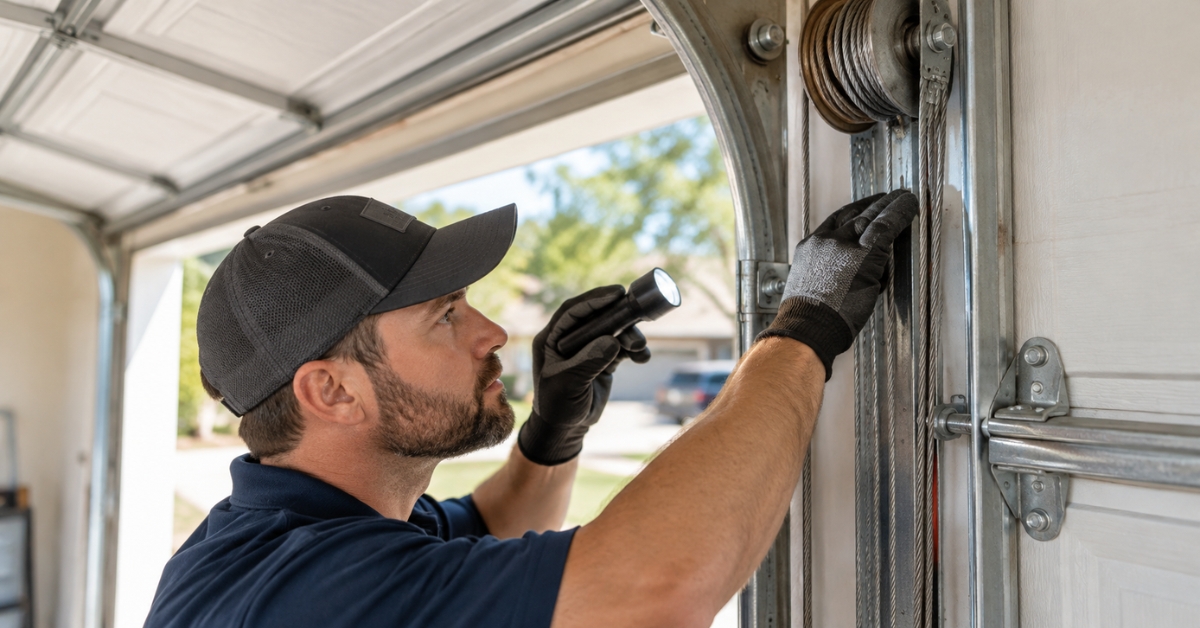
Cable deterioration is not always obvious from a distance. Individual wire strands may begin to fray, corrosion can develop, or the cable may wear where it repeatedly contacts drums and other hardware. The door might continue operating during these early stages.
Preventative maintenance provides an opportunity to identify these changes before the cable reaches the point of failure. When significant deterioration is found, professional garage door cable replacement may be necessary rather than waiting for a damaged cable to break.
Homeowners should avoid attempting to adjust, detach, or replace tensioned cables themselves. The forces involved in a garage door counterbalance system can make this work hazardous without the proper equipment and experience.
Small Parts Can Create Larger Problems
A garage door depends on numerous pieces of hardware that rarely receive much attention. Brackets, bearings, fasteners, hinges, rollers, drums, and other components work together each time the door travels along its tracks.
This is one reason inspecting garage door repair parts is an important part of preventative maintenance. A technician is not simply looking for a component that has already broken. The goal is to find developing wear and determine whether one deteriorating part is affecting the rest of the system.
A loose fastener, for example, may allow unwanted movement at a hinge or bracket. A worn roller may stop traveling smoothly and increase resistance. As resistance grows, other components have to compensate for it. The opener may work harder, hardware may vibrate more, and the door’s movement can become less consistent.
Catching these patterns early can help keep a small mechanical issue from spreading through the system.
Worn Rollers Change How the Entire Door Moves
Rollers guide the garage door through its tracks, so their condition directly affects how smoothly the door travels. Because rollers continue to function even as they wear, deterioration can be easy to overlook.
A worn roller may develop excessive play, stop rotating freely, or move unevenly through the track. Bearings can also deteriorate over time. Instead of rolling smoothly, the component may drag or wobble as the door moves.
Noise Can Be an Early Clue
A garage door becoming louder does not automatically identify a specific problem, but changes in sound can provide useful clues. Grinding, rattling, squeaking, or other new noises may indicate that components are no longer moving as smoothly as they once did.
Noise should therefore be considered alongside the physical condition of the system. Simply lubricating a noisy roller does not address a worn bearing, damaged wheel, or another mechanical defect.
Roller Wear Can Affect Alignment
Excessive roller movement can also influence how the door sits within its tracks. The door may begin moving less evenly, particularly as it transitions through curved track sections.
Over time, this uneven movement may contribute to additional strain on hinges, tracks, and the opener. Regular maintenance allows roller condition to be evaluated before the movement becomes severe enough to interfere with normal operation.
Hinges Take Stress at Every Panel Joint
Hinges allow sectional garage doors to bend as they move from a vertical position into the horizontal tracks above the garage. That repeated motion places stress on hinge points every time the door opens or closes.
Loose screws, worn pivot points, cracking around mounting areas, or bent hardware can all change how forces move through the door. These problems may begin subtly.
A loose hinge, for instance, may initially produce little more than additional vibration. If it continues moving, however, it can affect how adjoining sections travel. That movement may also place stress on fasteners and other nearby hardware.
Preventative garage door maintenance gives technicians an opportunity to identify these developing problems while the components are still functioning.
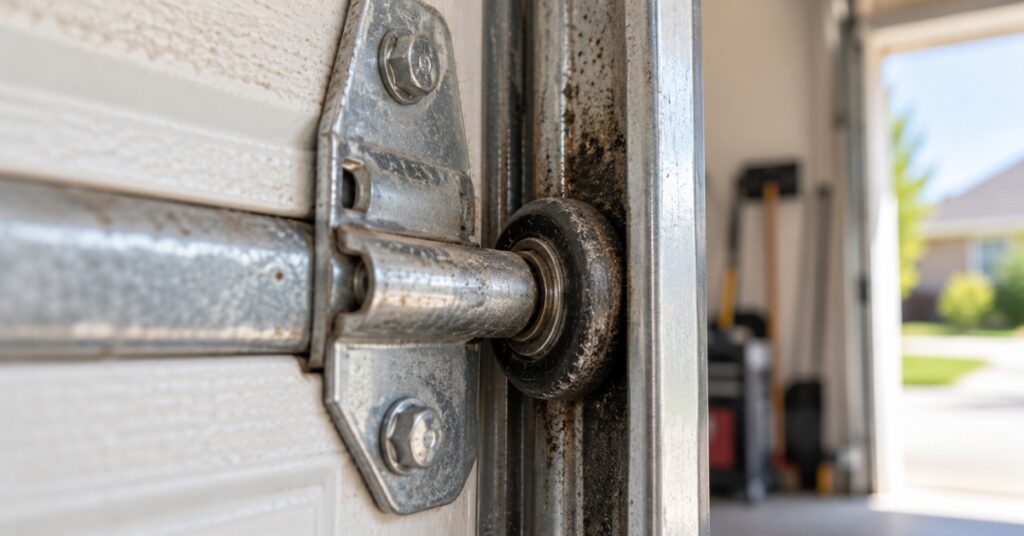
Tracks Can Shift Without Looking Obviously Damaged
Homeowners often associate track problems with dramatic damage, such as a visibly bent section. In reality, track alignment can change gradually.
Vibration, loose mounting hardware, impacts, structural movement, or ongoing stress from poorly moving rollers can alter track positioning. Even relatively small changes may influence how smoothly the door travels.
Alignment Matters Throughout the Door’s Path
Tracks need to guide the rollers consistently from the floor to the overhead position. If one area is misaligned, the door may encounter additional resistance at the same point during every cycle.
Repeated resistance can accelerate wear elsewhere. Rollers may experience additional side loading, hinges may move differently, and the opener may have to overcome more resistance.
A maintenance inspection can identify loose mounting points, unusual wear marks, or changes in roller movement that suggest the track system deserves closer attention.
Springs Should Be Evaluated Before Failure
Springs are among the most important components in the garage door system because they counterbalance much of the door’s weight. Like other mechanical components, they experience repeated cycles and can deteriorate over time.
Homeowners may notice changes such as unusual gaps, corrosion, inconsistent door movement, or other visible signs that deserve professional attention. Knowing the basic signs of spring wear can help homeowners recognize when an inspection should not be postponed.
However, visual inspection has limits. Springs operate under substantial tension, and homeowners should not loosen hardware, adjust spring tension, or attempt repairs as part of a DIY maintenance routine.
A professional inspection can consider spring condition alongside the rest of the system. This matters because problems elsewhere can increase the amount of work the counterbalance system has to perform.
Wear Often Develops as a Chain Reaction
One of the most useful ways to think about garage door maintenance is to stop viewing every component as an isolated part.
Imagine that a roller begins to deteriorate. It develops resistance and no longer travels smoothly. That resistance causes the door to vibrate more as it moves. Fasteners may gradually loosen. Hinges experience additional movement. The opener works harder to move the door through the affected area.
The original issue may have been one roller, but the resulting stress can affect several components.
The same pattern can begin with a shifted track, loose hinge, damaged cable, or another worn part. This is why simply replacing whatever finally breaks may not address the condition that contributed to the failure.
Preventative maintenance looks for relationships between these components.
Lubrication Is Useful, but It Is Not the Whole Maintenance Plan
Lubrication is often the first thing homeowners associate with garage door maintenance. Proper lubrication can reduce friction in appropriate moving components and help support smoother operation.
It cannot repair mechanical wear.
Lubricant will not restore a frayed cable, straighten a damaged hinge, correct a misaligned track, tighten loose mounting hardware, or rebuild a worn roller bearing. In some situations, a quieter door immediately after lubrication may even make a developing mechanical issue seem less urgent.
Maintenance should therefore include observation, inspection, and evaluation in addition to lubrication. The purpose is to understand the physical condition of the system rather than simply make it operate more quietly.
Changes in Movement Deserve Attention
A garage door does not have to stop working completely before there is a reason to inspect it. Changes in operation can provide early warnings.
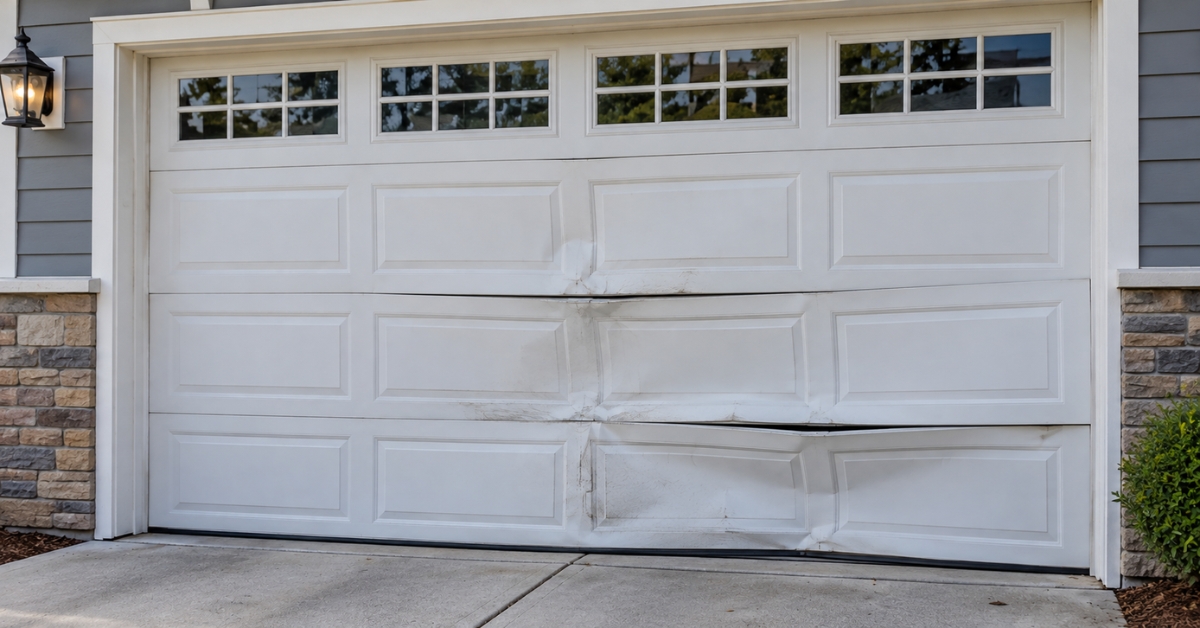
A door that begins shaking, hesitating, moving unevenly, producing new noises, or appearing crooked may be showing the effects of developing wear. Likewise, visible fraying, loose hardware, unusual gaps, metal shavings, or repeated vibration can indicate that something has changed.
Homeowners can safely observe the door from a distance during normal operation, but components involving springs, cables, brackets, and other tensioned hardware should be left to trained professionals.
Paying attention to changes is useful because garage door components usually do not go from perfect condition to complete failure instantly. Wear develops over time, and those intermediate stages are where preventative maintenance has the greatest value.
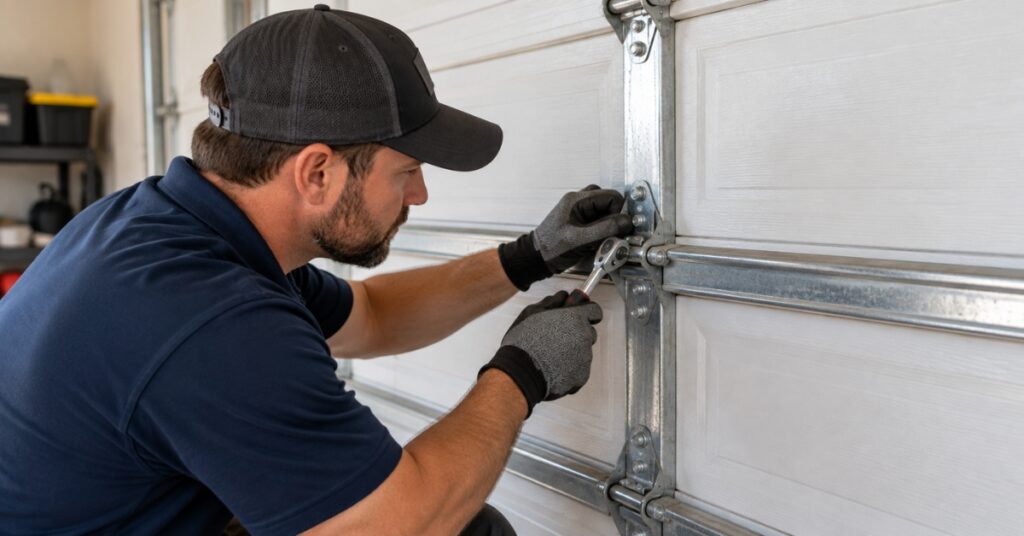
Maintenance Is About Finding Wear Before It Becomes Failure
The most valuable maintenance work often involves components homeowners rarely notice. Cables can fray strand by strand. Rollers can develop play. Hinges can loosen. Tracks can shift slightly. Bearings can become rough. Fasteners can gradually back out as the system vibrates.
Any one of these changes may seem minor, but a garage door operates as an interconnected mechanical system. When one component stops moving as intended, additional forces can be transferred elsewhere.
Regular garage door maintenance provides a chance to identify these patterns while the door is still operating. Instead of waiting for a sudden failure to reveal the weakest component, preventative inspection focuses on what is beginning to change and what that change may be doing to the rest of the system.
That approach can help homeowners address worn components at a more manageable stage while supporting safer, smoother, and more consistent garage door operation.
Frequently Asked Questions
How often should a garage door be professionally inspected?
The appropriate schedule depends on the door’s age, frequency of use, environment, and previous repairs. A heavily used garage door may need closer attention than one that operates only occasionally. Homeowners should also consider an inspection when they notice changes in noise, movement, or alignment.
Can I inspect garage door cables myself?
Homeowners can visually observe cables without touching or adjusting them. Look for obvious fraying, corrosion, or unusual positioning. Because cables operate as part of a tensioned system, repairs and adjustments should be performed by a qualified professional.
Does a noisy garage door always need repair?
Not necessarily. Some noise may be related to normal vibration or components that need appropriate lubrication. However, new or increasing sounds can also indicate worn rollers, loose hardware, alignment issues, or other mechanical problems. The cause should be identified rather than assuming lubrication will solve it.
What happens when garage door rollers wear out?
Worn rollers may wobble, drag, bind, or stop rotating smoothly. This can increase noise and resistance while potentially adding stress to tracks, hinges, the opener, and other parts of the system.
Can loose hinges affect garage door operation?
Yes. Hinges help garage door sections move together as the door follows the tracks. Excessive looseness or damaged hinge hardware can contribute to vibration, uneven movement, and additional stress on nearby components.
Why is preventative maintenance important if the garage door still works?
A functioning door can still contain components that are gradually deteriorating. Preventative maintenance is designed to identify wear before it progresses into a broken cable, damaged roller, misaligned track, failed spring, or another problem that interferes with operation.
Next Post
No next post