
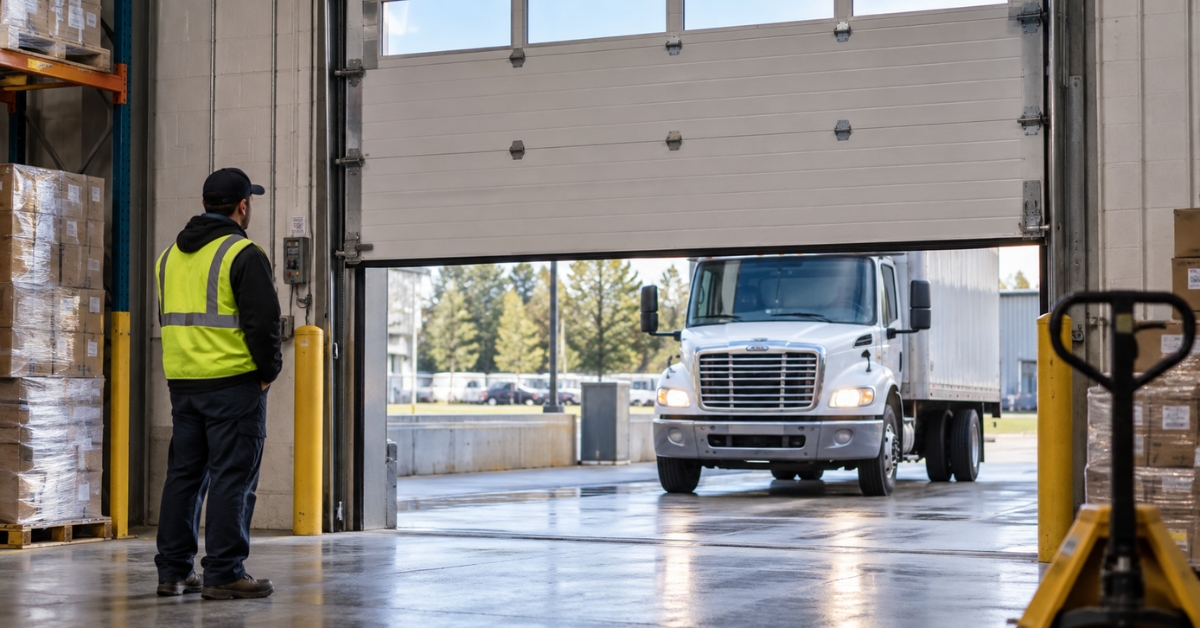
A commercial garage door does not have to stop moving completely to become a business problem. A door that takes longer to open, hesitates halfway through a cycle, makes unusual noises, or responds inconsistently to controls can already be affecting how people and materials move through a facility.
For business owners, facility managers, landlords, and operations teams, those small interruptions can have consequences beyond the door itself. Employees may wait for access, deliveries can back up, vehicles may need to use another entrance, and security procedures can become harder to maintain. Recognizing these problems early can help prevent a minor operational inconvenience from becoming a larger disruption.
A Garage Door Problem Can Become an Operations Problem Quickly
Commercial doors often serve as active access points throughout the workday. Warehouses, automotive facilities, loading areas, storage buildings, service centers, and other commercial properties may cycle their doors many times as employees, customers, equipment, and deliveries move through the building.
That workload means a small mechanical or electrical problem can repeatedly interrupt normal operations. Scheduling commercial garage door repair when symptoms first appear can allow the system to be evaluated before an unreliable door becomes an unusable access point.
The key is to look beyond whether the door technically still opens. A commercial door can remain operational while becoming slow, inconsistent, noisy, or difficult to control. Those changes often provide useful warning signs that something within the system needs attention.
Slow Cycling Creates More Than a Short Wait
A door that takes noticeably longer to open or close may initially seem like a minor inconvenience. In a commercial setting, however, that delay may happen dozens of times during a shift.
Employees may sit in vehicles waiting for the opening to clear. Forklift traffic can be interrupted. Delivery drivers may have to wait before reaching a loading area. When multiple people depend on the same access point, a delay of several seconds can repeatedly disrupt workflow.
A change in operating speed may be associated with several components, including the opener, springs, tracks, rollers, or other hardware. The important point for operations teams is that a change from the door’s normal behavior deserves attention.
Inconsistent Controls Can Make Access Unpredictable
Commercial garage doors may be operated using wall controls, remotes, keypads, sensors, access systems, or other control equipment. When the door responds immediately one time but requires several attempts the next, employees can no longer depend on the access point working as expected.
Problems involving commercial door openers can also affect how reliably the door starts, stops, or completes its cycle. The issue may involve the opener itself, a control device, a sensor, a connection, or another part of the system.
Inconsistent operation can be especially disruptive when a door is used for scheduled deliveries or controlled access. Employees may begin developing workarounds, such as leaving a door open longer than necessary or relying on another entrance. Those workarounds can introduce additional workflow and security concerns.
Delayed Opening Can Affect Deliveries
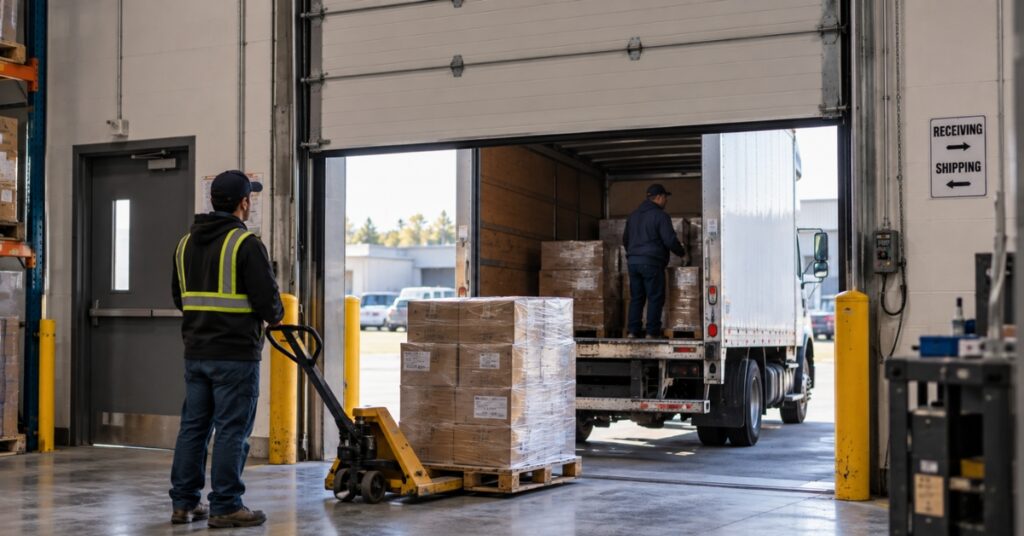
Loading and receiving schedules often depend on predictable access. If a delivery truck arrives and the designated door takes several attempts to open, the delay can extend beyond the driver waiting outside.
Receiving employees may be pulled away from other work. Loading equipment may sit idle. Another vehicle could arrive while the first delivery is still waiting. In facilities with tight schedules or limited loading space, one unreliable door can create a chain of delays.
Repeated problems are particularly important to track. If the same door regularly causes a five-minute interruption, the business is dealing with more than an occasional inconvenience. It has an access point that is beginning to interfere with operations.
Unusual Noise Can Be an Early Warning
Commercial garage doors naturally produce some sound during operation, but employees who use the same door every day often know what normal sounds like. Grinding, scraping, popping, squealing, rattling, or sudden banging noises can signal a change in the system.
Noise can be associated with rollers, tracks, hinges, springs, cables, fasteners, or other moving components. It does not automatically identify a specific failure, but a new or worsening sound should not be dismissed simply because the door continues to move.
This is especially important with large or frequently used commercial doors. Continued operation can place additional stress on components when something is misaligned, worn, loose, or damaged.
Operations teams can benefit from encouraging employees to report changes in door behavior instead of waiting for a complete failure. The people who use an access point every day may notice a new sound or movement pattern before a manager does.
Repeated Interruptions Add Up Across the Workday
A garage door problem can create lost time in small increments. An employee waits for a second attempt at opening. A delivery driver pauses while someone finds another control. A vehicle is redirected to another bay. Staff members stop what they are doing to investigate a strange sound.
Each individual interruption may be brief. Together, they can affect productivity.
This is one reason commercial door problems should be viewed in terms of operational impact rather than simply whether the equipment is still functional. A door that technically works but regularly interrupts employees is already affecting the business.
One Problem Can Shift Traffic to Other Doors
Facilities with multiple garage doors may temporarily compensate for an unreliable door by using another bay. That can be useful for a short period, but it may also concentrate traffic in areas that were not designed to handle the additional activity.
Delivery vehicles may have to maneuver differently. Employees may cross active work areas more frequently. Equipment could travel farther between loading and storage areas. Customers or vendors may be directed through entrances normally reserved for other purposes.
A backup access point can keep operations moving, but it does not necessarily eliminate the underlying disruption.
Door Problems Can Affect Building Security
A commercial garage door is often part of the property’s physical security. It separates inventory, vehicles, equipment, work areas, or storage spaces from exterior access.
A door that does not close consistently can therefore create a different type of operational concern. Employees may have to watch the opening, manually confirm that it has closed, or remain in the area longer than normal.
Some businesses may respond by leaving a problematic door open during busy periods because repeatedly cycling it has become inconvenient. While that may reduce delays, it can also increase exposure to unauthorized entry, weather, pests, and other environmental conditions.
A door that reverses unexpectedly or stops before reaching the floor should be evaluated rather than treated as a normal inconvenience.
Changes in Movement Should Not Be Ignored
Speed and sound are not the only warning signs. The physical movement of the door can also indicate that something has changed.
A door may appear uneven while traveling, shake during operation, pause unexpectedly, reverse without an obvious obstruction, or fail to reach its normal fully open or closed position. Employees may also notice that the bottom of the door no longer appears level.
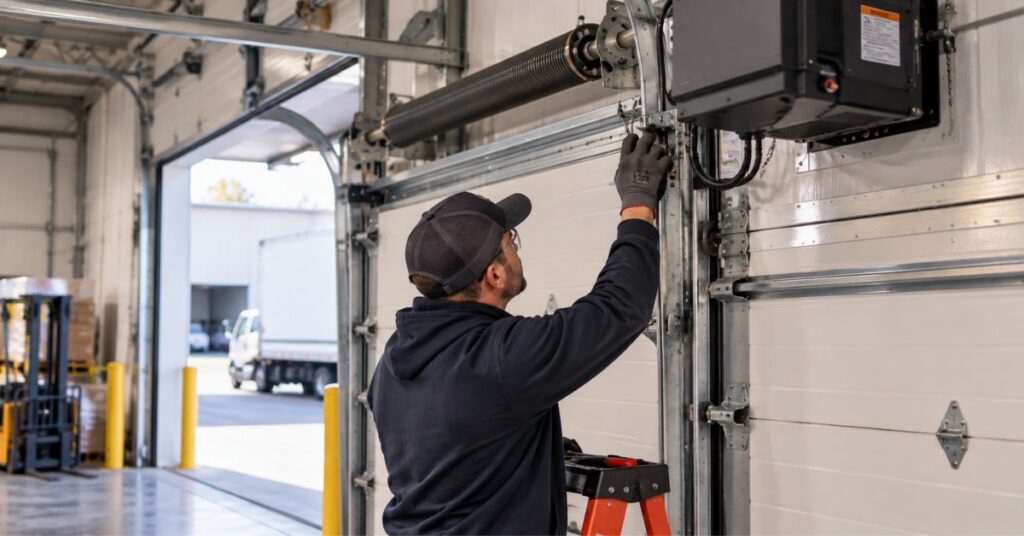
These symptoms can involve different parts of the system, so visual observation alone is not enough to diagnose the cause. Certain commercial garage door components are also under significant tension, making improper adjustment potentially hazardous.
For facility teams, the safer approach is to document the symptom, limit use when necessary, and have the system evaluated rather than attempting an uncertain repair.
The Cost of Waiting Is Not Limited to the Repair
When maintenance decisions are delayed, the discussion often focuses on whether the eventual repair could become more expensive. For a business, however, the larger concern may be the operational cost surrounding the failure.
Imagine a primary receiving door becoming unusable shortly before a scheduled delivery. Employees may have to redirect the truck, rearrange stored materials, clear another bay, or postpone unloading. A service business may have difficulty moving customer vehicles in or out. A landlord may have tenants reporting that a shared access point cannot be used.
Those consequences can make the timing of the failure more important than the mechanical problem itself.
Addressing unusual door behavior earlier gives operations teams more control over when the issue is evaluated. Waiting for complete failure means the door may determine the schedule instead.
Tracking Small Problems Can Help Facility Teams Respond Earlier
Commercial properties often have maintenance systems for HVAC equipment, plumbing, electrical systems, vehicles, and other essential assets. Garage doors can benefit from the same approach.
Instead of relying on memory, employees can report when a door begins behaving differently. Useful information includes which door is affected, when the problem occurs, what the door does, whether the issue is intermittent, and whether any unusual sound accompanies it.
Patterns can then become easier to identify. A problem that seemed random may turn out to occur several times per day.
Regular garage door maintenance can also provide opportunities to identify wear, movement changes, or other concerns before employees are dealing with repeated interruptions.
Knowing When the Door Is Affecting More Than Itself
The clearest sign that a commercial garage door problem has become a business problem is when people begin changing what they do because of it.
Employees should not routinely have to wait, retry controls, redirect vehicles, avoid a particular bay, manually supervise closing, or schedule deliveries around an unreliable door. Those behaviors indicate that the equipment is already influencing workflow.
Facility managers can look for several practical indicators:
- Opening or closing takes noticeably longer than before.
- Controls respond inconsistently.
- New grinding, scraping, popping, or rattling sounds appear.
- The door pauses or reverses unexpectedly.
- Employees regularly use another entrance to avoid the affected door.
- Deliveries are delayed while staff work around access problems.
- The door does not consistently reach its fully open or closed position.
- Staff members are repeatedly reporting the same issue.
A complete shutdown is not the only threshold that matters. Operational disruption often begins much earlier.
Plan Around the Business, Not the Breakdown
Commercial garage doors are infrastructure. Like other building systems, they are easiest to manage when problems are identified before they dictate what happens next.
For a lightly used storage door, a minor delay may have limited consequences. For a primary loading bay, service entrance, fleet access point, or customer-facing door, the same symptom may affect several parts of the operation.
Understanding door warning signs can help managers recognize when an inconvenience is developing into a recurring operational issue. The goal is not to assume every unusual sound or slow cycle means a major failure. It is to notice changes, consider how frequently the door is used, and evaluate what would happen if that access point became unavailable.
A commercial garage door problem starts affecting the rest of the business when employees, deliveries, customers, security procedures, or normal workflows have to adapt around it. Recognizing that point before the door stops completely gives a business more options for addressing the issue on its own schedule.
Frequently Asked Questions
Should a commercial garage door be serviced if it still opens and closes?
It may be worth having the door evaluated if its normal behavior has changed. Slow operation, unusual noise, inconsistent controls, unexpected reversing, uneven movement, or repeated interruptions can indicate a problem even when the door remains operational.
Why is a slow commercial garage door a concern?
A slow door can repeatedly delay employees, vehicles, loading equipment, and deliveries. The operational impact depends on how frequently the access point is used and how important it is to the facility’s normal workflow.
What should employees do if a commercial garage door starts making unusual noises?
Employees should report the change and avoid attempting adjustments to components they are not trained to service. Recording when the sound occurs and what the door is doing at the time can provide useful information during an evaluation.
Can garage door problems affect security?
Yes. A door that does not close reliably, reverses unexpectedly, or is intentionally left open because operation has become inconvenient can affect control over access to the building.
When should a business stop using a problematic garage door?
If a door shows signs that could present a safety concern, moves unpredictably, appears damaged, or cannot reliably open and close, use may need to be restricted until the system can be professionally evaluated. Employees should follow the facility’s safety and maintenance procedures.
Why address a problem before the door completely fails?
Early attention can reduce the risk of an unexpected shutdown occurring during deliveries, customer appointments, loading operations, or other important business activities. It also gives facility teams more flexibility to plan around service instead of reacting to a sudden loss of access.


